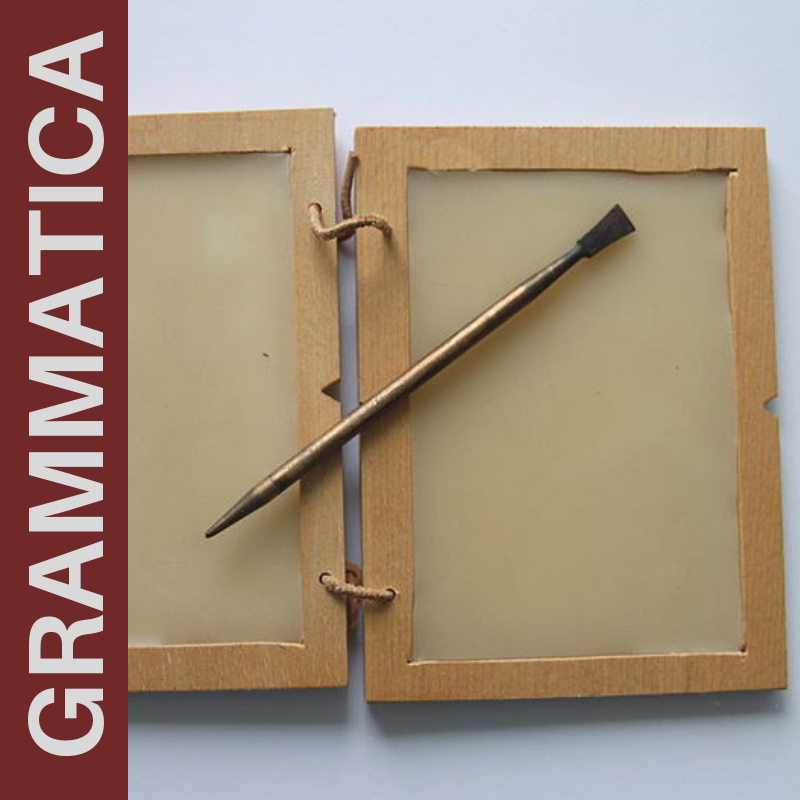
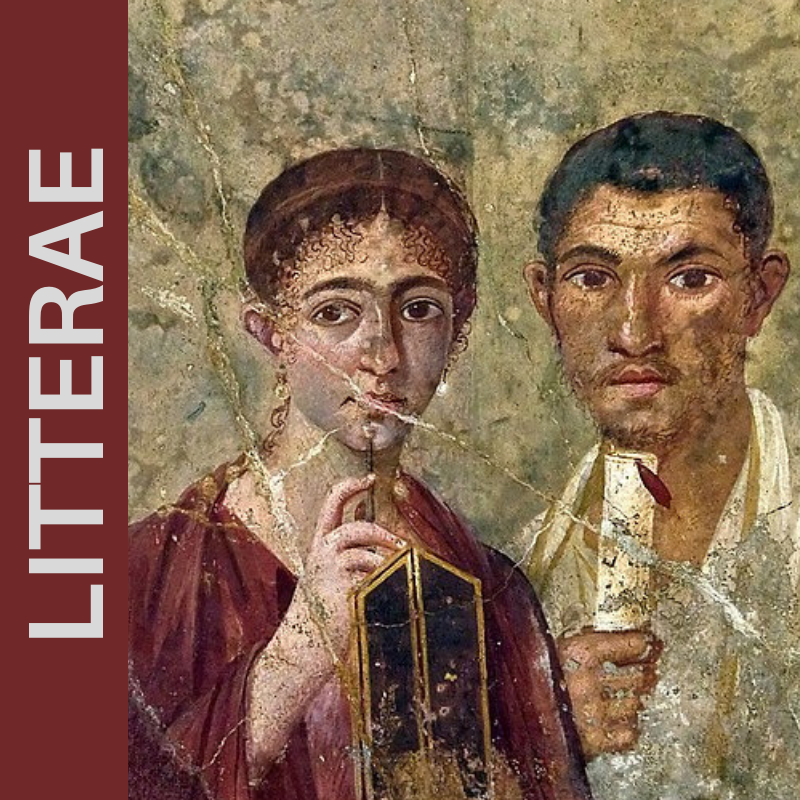

Aelia mentions that she makes marks (signa) on the text. What does this mean? Students were expected to mark the text after it was read aloud to them by their grammaticus. Often their texts did not have punctuation or even word separation, so they were expected to mark their texts with punctuation, change of speaker, and different parts of the sentence. For more on how students would mark their texts see R. Cribiore, Gymnastics of the Mind: Greek Education in Hellenistic and Roman Egypt, especially pages 189-192.)
Often corporal punishment was administered by instructors. For complaints about corporal punishment, see Quintilian Institutio Oratoria 1.3.14-15 and Horace Epistles 2.1.69-71
Resources on Roman education:
Education in Ancient Rome (video featured below)
Glimpse of Teenage Life in Ancient Rome (video featured below)
Resources on the Dido and Aeneas:
Story of the Aeneid (video featured below)
Illustrations of Aeneid 4 from the Vatican Vergil Codex
Vatican Library - Digital Version of Codex
Quintilian
Martial
Apuleius: In this passage, Apuleius mentions drinking cups (poculum). The ancients typically mixed their wine with water, the Greeks in a large mixing bowl “crater[r]a” (as in the original text here), the Romans in their individual cups (pocula). In connection with special occasions such as libations, the wine might be consumed unmixed, which is far more potent, e.g. Aeneid 1.728-730. A nod to Greek custom of mixing bowl (cratera) also appears in this same passage from the Aeneid (1.724). Regularly drinking unmixed wine was considered “barbaric,” e.g. of the Macedonians (Demosthenes 2.18), perhaps even leading to lewd dances (Demosthenes 2.19)!
St. Augustine